
Twenty years after the Haditha massacre, why are militaries no more accountable?

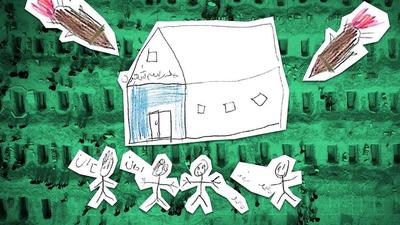
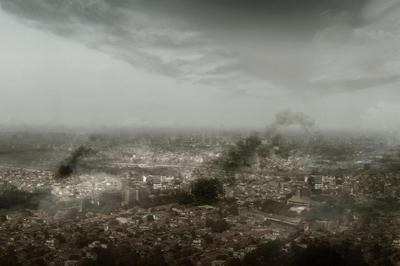
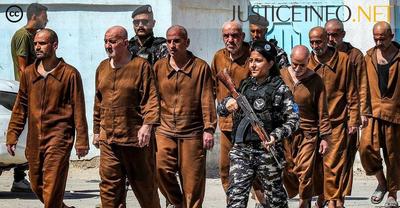
On the twentieth anniversary of the Haditha massacre, justice for the victims is still out of reach. The way wars are fought may be changing, but the evasion of accountability remains a defining feature of modern conflict. This post remembers the victims of Haditha and reflects on the enduring failure to deliver justice, at a time when technological advances risk deepening the same patterns of dehumanisation and impunity.

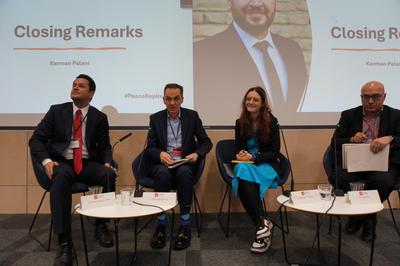
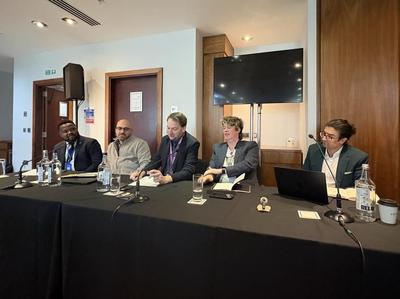
LSE and Moja round-table on Women, Law and Climate Resilience event in Baghdad overview.

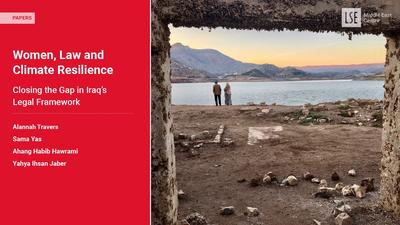
The event marked the culmination of a project and report, Closing the Gap in Iraq’s Legal Framework, written by Alannah Travers with research by Sama Yas, Ahang Habib Hawrami and Yahya Ihsan Jaber. Our findings, based on interviews and fieldwork across ten provinces, shows how Iraq’s accelerating climate crisis is experienced first and foremost as a social crisis of justice and governance.

Fragmented Justice and Accountability in Iraq and Syria in a Multipolar World

Drawing on the contrasting trajectories of Iraq and Syria, this paper demonstrates how transitional justice itself is the contested arena shaped by power politics, legal pluralism, and selective engagement. In tracing these dynamics, and by situating these cases within a shifting geopolitical landscape, the paper shows how transitional justice is being redefined not only by domestic politics but by global power realignments, and it asks whether a universal vision of justice is still viable, or whether it will be determined by fragmented sovereignties and rival legal orders.

Revisiting Customary Humanitarian Law: The ICRC’s Study at 20

The Institute for International Peace and Security Law (Universität zu Köln) and the Institute for International Law of Peace and Armed Conflict (Ruhr-Universität Bochum) are hosting a workshop for young researchers, scheduled to take place in Bochum on September 18-19th, 2025. Over the course of the workshop, early career scholars will explore customary international humanitarian law in light of the ICRC’s 2005 study on this subject. Another conference, I look forward to attending...

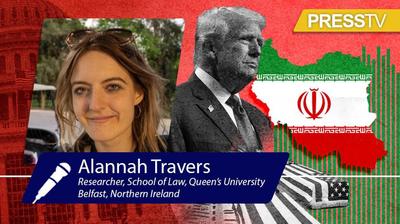
Comment l’agression contre l’Iran a été normalisée

L’attaque d’Israël contre l’Iran, lancée le 13 juin dans le but affiché de cibler le programme nucléaire militaire du pays, en détruisant des installations et en tuant des scientifiques, des dirigeants militaires et des civils, a constitué à la fois une escalade militaire dangereuse et une attaque brutale contre l’ordre juridique international. La décision des États-Unis, sous la direction du président Donald Trump, de lancer des frappes militaires directes contre l’Iran, a transformé le conflit...

Gaza, Darfour: quel est l’intérêt de la Convention sur le génocide ?

Du Soudan à la Palestine, en passant par la Bosnie, le Myanmar et l’Irak, la définition internationale restrictive du génocide n’a guère permis qu’une autre forme de guerre juridique, déployée de manière sélective. Les cas récents du Darfour et de Gaza ont encore mis en lumière les manipulations dont la Convention sur le génocide fait l’objet, explique Alannah Travers. Et les civils sont laissés à l’abandon.
Load More Articles